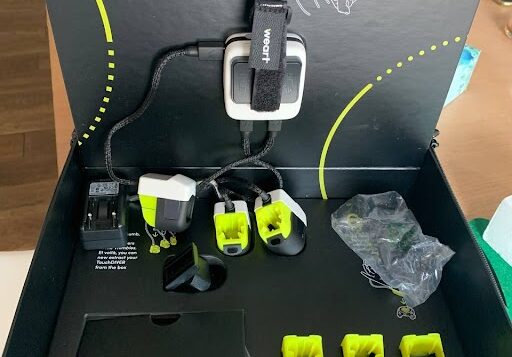
Beyond the Screen: Integrating WEART Haptic Devices for a Multi-Sensory Enterprise Experience

Navigating the intricate maze of technological progress and human engagement reveals a constantly shifting terrain. Haptic devices stand out as the vanguard in this revolution, and WEART is undoubtedly leading the charge. In this expanded discourse, we at Qualium Systems, specialists in custom IT engineering, explore the engineering marvels and the expansive business applications of WEART’s pioneering haptic technology.

The Technical Ecosystem: A Deeper Dive

Hardware Innovation: More than Just Touch

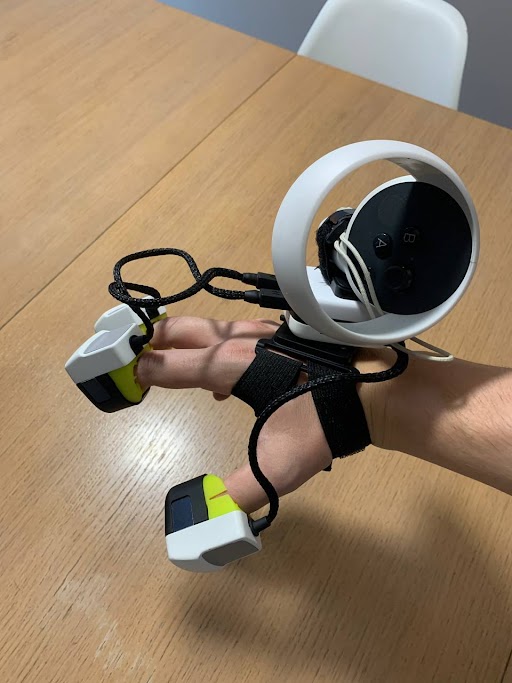
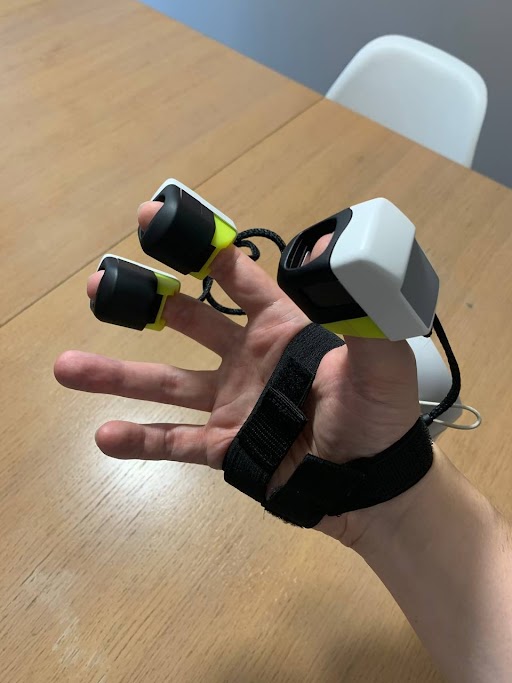
WEART’s devices go beyond mere simulation to recreate tactile sensations intricately. The wearables make use of cutting-edge actuators and sensors to offer a wide spectrum of tactile experiences, from the velvety softness of a petal to the ruggedness of a rock.

1. Actuators: Employing both mechanical and electronic components, actuators deliver precise tactile feedback. They play a crucial role in mimicking various textures, thermal cues and forces, pushing the boundaries of what users can ‘feel’ digitally.
Hardware

2. Sensors: These aren’t your everyday touch sensors. WEART’s sensors can detect minute changes in pressure and movement, making the haptic interface responsive and incredibly realistic.
Hardware

Software Engineering: Facilitating Haptic Integration

Qualium Systems takes pride in offering SDKs compatible with both Unity and Unreal Engine, making the integration of WEART’s groundbreaking haptic features easier than ever.

1. Unity & Unreal Engine SDKs: These engines are favored by developers for their ease of use and flexibility. Our SDKs are tailored for these platforms, offering rapid prototyping and high-fidelity rendering capabilities.

2. Custom APIs: Our SDKs come with a range of APIs that allow you to fine-tune the haptic experience to align with specific use-cases or requirements.

3. Data Analytics: The SDKs also include telemetry functions that capture key metrics. Businesses can assess user engagement in real-time, modifying experiences for better interaction.

Expanded Case Study: The Transformational Power of Haptic Technology in VR Chemistry Lessons

A Paradigm Shift in Science Education

Our VR Chemistry Lessons App is a landmark example of how WEART’s haptic technology can revolutionize education. Typically, the teaching of chemistry has relied heavily on theoretical knowledge, supplemented occasionally by lab experiments. The WEART-enabled VR Chemistry App changes this equation dramatically.

1. Molecular Vibration: For the first time, students can tangibly feel the vibrations and movements of molecules, providing an entirely new dimension to understanding kinetic energy.

2. Chemical Reactions: Imagine the educational impact of feeling the heat dissipate in an exothermic reaction or the sudden cold in an endothermic process. It’s not just theory; it’s practically hands-on learning.

3. Substance Interaction: Different elements and compounds come with unique textures and properties. Our app lets students ‘touch’ these materials virtually, further enriching their understanding.

The Birth of Dynamic Learning Environments

The integration of WEART’s technology moves education from a unidimensional, rote-learning model to a multi-sensory, experience-driven paradigm. This shift is monumental in helping students better retain and apply complex scientific concepts.

Business Implications: Why This Matters to You

Economic Efficiency: Beyond Cost Savings

Integrating WEART’s haptic devices significantly reduces the overheads associated with conventional training methods. Virtual reality setups eliminate the need for physical resources and spaces, making training efficient and cost-effective.

Customer Experience: A New Frontier

Introducing a tactile component to your services enhances the overall user experience. Whether it’s a virtual showroom or an online educational platform, the added layer of tactile interaction can make your services unforgettable.

Competitive Strategy: The First-Mover Advantage

In a market that is continually evolving, early adoption of new technologies like WEART’s haptic devices can give you a significant edge. It’s not just a matter of staying current; it’s about leading the charge in the new age of digital interaction.

Final Remarks: The Road Ahead

The amalgamation of WEART’s groundbreaking haptic technology with Qualium Systems’ expertise in software development is a game-changer. Whether you’re an innovator in the technical sphere or a forward-thinking business owner, the era of multi-sensory computing has arrived. The scope of what this technology can achieve is only limited by our imagination. At Qualium Systems, we’re excited to be your partners in this exhilarating journey into the future.

Latest Articles

From Pain Relief to Rehabilitation: A Portrait of VR Therapeutics in 2026
May 27, 2026
From Pain Relief to Rehabilitation: A Portrait of VR Therapeutics in 2026

VR therapeutics is becoming a real category of reimbursable medicine. It now has FDA authorization pathways, dedicated billing codes, and growing support from commercial insurers. This shift didn’t happen overnight. It has built up over several years through a series of regulatory, clinical, and commercial milestones that together make 2026 a turning point for the industry. The market is starting to reflect that. Estimates vary by methodology, but SNS Insider projects the broader VR healthcare market to grow from $4.27B in 2024 to $46.4B by 2032 (a 33% CAGR). VR telerehabilitation alone is projected to grow from $1.2B in 2026 to $2.67B by 2030, a 22% CAGR that captures the segment this article focuses on. Three moments tell the story of how we got here. 2021: The first prescription VR therapy gets FDA cleared. AppliedVR’s RelieVRx became the first VR product authorized as a prescription medical device in the US. 2023: Medicare opens the reimbursement door. Centers for Medicare and Medicaid Services created the first VR-specific billing code, placing prescription VR into the Durable Medical Equipment category. The practical effect: doctors gained a way to prescribe VR therapy, and insurers gained a code to pay against. 2025: Commercial insurers begin following Medicare’s lead. In September, Cigna became one of the first major commercial payers to cover FDA-approved digital therapeutics. In this article, we’ll walk through six therapeutic domains where that infrastructure is taking shape. Each has its own clinical logic, its own leading players, and its own path to scale.  Market architecture Before we walk through the six therapeutic domains, it’s worth understanding the shape of the market they sit inside: what’s growing, where the money is concentrated, and what changed structurally between 2023 and 2025 to make any of this viable. Where therapy and rehab sits inside VR healthcare VR healthcare as a whole spans everything from surgical training simulators to anatomical education tools. But within that broader market, VR therapeutics and rehabilitation is the fastest-growing application segment, and it’s also where regulatory and reimbursement infrastructure is forming most actively. Inside therapy-and-rehab itself, two sub-segments are consistently identified by independent market research as the fastest-growing: pain management and mental health therapy. Both have something the other categories don’t yet: FDA-cleared products in the market, peer-reviewed efficacy data, and at least nascent reimbursement pathways. Geographically, the market is concentrated in two regions for very different reasons. North America is leading adoption mainly because the FDA has started approving prescription VR therapies, and dedicated billing codes now allow healthcare providers to get reimbursed for using them. Europe is catching up via different infrastructure, particularly Germany’s DiGA framework, which provides a parallel route to physician prescription and statutory health insurance coverage. France’s PECAN and the UK’s DTAC are developing in a similar direction. The pattern is clear: once regulators create a formal pathway, companies and investment tend to follow. What the hardware cycle unlocked The clinical use cases for VR therapy didn’t really change between 2020 and 2025. What changed is that the hardware finally became viable for the business models the clinical work demanded. Consumer-grade standalone headsets brought the price floor down to where at-home prescription models work. Meta Quest 3, Meta Quest 3S, and Pico 4 helped bring standalone VR headsets to more affordable consumer price levels—an important step for prescription VR therapies that patients are expected to use at home. RelieVRx, for example, is a self-administered program delivered to patients in their living rooms; that model is described in detail in MDIC’s case study of the product. Major headset manufacturers are doubling down on healthcare partnerships rather than building healthcare-specific hardware. A useful signal here is HTC VIVE’s April 2025 expansion with Mynd Immersive, Select Rehabilitation, and AT&T into more than 150 US senior living communities—the largest deployment of immersive therapeutics into senior care to date. The interesting strategic detail isn’t the size of the rollout but its structure: a hardware OEM (HTC), a content/care platform (Mynd), a clinical services partner (Select Rehab), and a connectivity provider (AT&T). That’s the four-party stack that scaled clinical VR is going to require, and partnerships like this one are essentially templates that the rest of the industry will be copying. Body: pain & physical rehab 1. Pain management Pain is the single largest unmet need in clinical medicine. In the United States alone, roughly 50 million adults live with chronic pain, and the toolkit physicians have to treat it is uncomfortably narrow: opioids carry addiction risk, non-opioid pharmaceuticals are inconsistently effective, and behavioral therapies are scarce and slow. Procedural pain is its own category, often managed with anesthesia or sedation, which adds cost, risk, and recovery time. This is the gap VR fills. The clinical evidence for VR as a pain intervention rests on two well-documented neurological mechanisms. The first is gate control theory: pain signals traveling up the spinal cord compete with other sensory inputs for processing capacity, and immersive visual and auditory stimulation can effectively crowd them out before they reach the brain as pain. The second is cognitive load: a fully immersive VR experience occupies enough of that capacity to leave less available for processing pain as pain. Together, these mechanisms make VR more than just a distraction. They turn it into a real neurological intervention, which helps explain why VR can reduce pain in clinical settings where simpler distractions like music or conversation often cannot. There are two distinct applications emerging from this. The first is procedural pain, where Medtronic provides the clearest commercial example. Medtronic’s VR solution makes office hysteroscopy more comfortable by immersing the patient in a virtual environment during the procedure. According to Medtronic, the immersive sedation-analgesia content reduces patient anxiety and decreases pain-related brain activity. The second application is chronic pain. RelieVRx, which we talked about above, is a shining example, receiving Breakthrough Device Designation and De Novo authorization specifically for chronic lower back pain. A regulatory pathway the AppliedVR team has documented in detail in the peer-reviewed literature. The clinical data behind…

Digital Twins for Digital Transformation Strategy in the Industrial Sector
April 22, 2026
Digital Twins for Industry 5.0 Transformation Strategy

Industrial digital transformation is no longer just about automation or collecting data. More and more, it comes down to having a live, accurate digital representation of what is actually happening across physical operations. That is what a digital twin does: it creates a virtual model of a machine, a production line, or an entire facility, and keeps it synchronized with real-world data in real time. This makes it more than a visualization tool. It becomes a working instrument for a variety of industrial applications: simulations, predictive maintenance, monitoring and analytics, process and operational optimization, quality control, worker enablement, EHS solutions, and faster decision-making. Industrial Extended Reality (XR) and immersive technologies are entering their second wave of adoption. While the first wave was shaped mainly by experimentation with XR, the current stage is enabled by mature hardware and significantly stronger digital capabilities, allowing organizations to realize the true value of VR and AR in practical, scalable ways. In parallel, digital transformation is shifting from the automation-led, low-human-involvement logic of Industry 4.0 toward a human-centric model built on human-machine collaboration and co-piloting in Industry 5.0. Industry is adopting Extended Reality (XR) faster than any other sector. Manufacturing and industrial operations accounted for 35.1% of the global digital twin market in 2025. More than half of companies using digital twins report profitability increases of over 20%, and Gartner predicts that by 2027, 40% of large industrial companies will use the technology, resulting in increased revenue. The market overall is projected to grow from $49.2 billion in 2026 to $228.46 billion by 2031. These numbers show that digital twins become a core part of how industrial companies compete and operate. In this article, we look at the specific areas where digital twins create the most value in the industrial sector today, walk through real-world cases from companies already using them at scale, and discuss where the technology is headed next. Why Digital Twins are more than virtual models The role of digital twins has broadened significantly, now covering simulation, planning, operations, and essential 3D visualization needs. As a strategic capability, the digital twin helps organizations understand the present state of assets and systems, anticipate what comes next, and make more precise, informed decisions. This is what separates them from the technologies they are often confused with. A 3D model is static and disconnected from physical reality. A simulation runs defined scenarios but doesn’t update as circumstances change. BIM captures asset properties at a point in time—valuable, but not dynamic. A digital twin does all three, continuously. Let’s look at how this works from a technological perspective. The technology stack behind the intelligence Within the virtual model, three interconnected layers work together.  The first is the data storage and processing layer, responsible for ingesting, organizing, and structuring incoming data streams. IoT sensors and edge devices form the foundation of data acquisition, continuously capturing physical parameters: temperature, vibration, pressure, energy consumption, throughput. This data moves through real-time pipelines into processing environments. The second is the analytics and AI layer, which interprets this data by detecting anomalies, identifying patterns, generating forecasts, and providing recommendations to guide operational decisions.  The third is the visualization and interface layer, translating these insights into clear, actionable formats: dashboards, alerts, or interactive simulations, that engineers, operators, and executives can easily use. A digital twin also integrates with the broader enterprise ecosystem, including engineering documentation, GIS platforms, maintenance systems, financial tools, and business networks. The result is a closed loop of intelligence. Physical reality continuously updates the virtual mode → the model generates insights → and those insights guide decisions that impact the physical system. Types of digital twins Depending on the level of detail and the specific operational goals, a digital twin can focus on a single component, a complete asset, an entire system, or even a full process. Recognizing these distinctions helps organizations select the right model for each use case. A component twin represents a single element (a pump, a bearing, a sensor) and is primarily used for granular condition monitoring and early failure detection.  An asset twin integrates multiple components into a unified model of a complete physical asset, such as a machine or a turbine, enabling a more comprehensive view of performance and interdependencies.  A system twin extends this further, representing how multiple assets interact within a broader operational environment (a production line, a power grid, or a supply chain node).  A process twin models entire workflows and decision sequences, making it possible to trace how disruptions, inefficiencies, or interventions propagate across an organization. In real-world deployments, these levels are layered: component twins feed into asset twins, which feed into system and process twins. This nested setup mirrors actual operational complexity and enables insights at any level, from individual parts to entire workflows. Where digital twins create the most industrial value Below, we break down the use cases where digital twins are generating the most value in the industrial sector today. Predictive maintenance and asset reliability Unplanned equipment downtime remains one of the most costly scenarios for any industrial enterprise. When a critical asset fails unexpectedly, the company loses not only on repairs but also on production chain disruptions, logistical failures, and reputational risks. This is why predictive maintenance powered by digital twins has become one of the most mature and economically justified applications of the technology. The traditional approach to maintenance operates on two models: reactive (repair after failure) or scheduled preventive (servicing on a fixed schedule, regardless of the actual condition of the equipment). Both models are inefficient. The first leads to emergency shutdowns, while the second results in excessive spending on servicing components that still have significant remaining life. The digital twin changes this paradigm. It creates a virtual copy of a physical asset that continuously receives sensor data and updates in real time. Through machine learning algorithms, the system analyzes wear patterns, compares current conditions against historical data, and predicts the moment when a component will reach a critical state. This enables maintenance to…

April 2, 2026
Quality and Security You Can Trust, Proven Again: Qualium Renews ISO 27001 and 9001 Certifications

More than 2 years ago, we initiated a focused effort to elevate our security and quality frameworks. Our objective wasn’t just to satisfy standards – it was to make security an integral part of our operations, from daily workflows to strategic decisions. Leading the initiative, Dmytro Stetsenko, Co-founder and CTO at Qualium Systems, stepped up to lead the audit internally, ensuring completion of formal ISO 9001 & 27001 auditor training and reinforcing our internal capabilities. In the months that followed, he partnered with compliance experts and process owners to enhance key operational workflows – from asset management and physical security to HR governance, risk management and business continuity. As Dmytro highlights: “The most significant transformation is in risk awareness. We didn’t just offer new controls, we fundamentally redefined how risks are identified, evaluated and addressed across a company.” Last month we successfully renewed both certifications, involving three-phase audits: an internal review, followed by evaluations from both our ISO 9001 auditor and a dedicated ISO/IEC 27001 audit team, with oversight from an accreditation officer to ensure additional scrutiny. Turning Security into Resilience: How We Built Stronger Quality and Security Frameworks As regulatory pressure intensifies across healthcare, finance and other data-sensitive industries, organizations are expected to demonstrate not only innovation but also measurable control over quality, security, and risk. This year we successfully reaffirmed its compliance with ISO 9001 and ISO/IEC 27001 standards, reinforcing our position as a trusted technology partner operating at the highest levels of operational excellence and information security. As Dmytro Stetsenko explains: “Regulatory pressure from frameworks like DORA and NIS2 continues to grow and compliance is becoming increasingly complex, demanding more resources. Our ISO 27001 certification in particular simplifies that landscape for our clients – reducing audit friction, accelerating approvals, and ensuring a consistently high standard of security.” Global frameworks such as DORA and NIS2 are reshaping expectations around cybersecurity, resilience, and governance. For companies operating in regulated environments, compliance is no longer optional – it is foundational. Qualium Systems ISO certifications provide a structured, internationally recognized framework that directly supports these evolving requirements: ISO/IEC 27001 ensures a mature Information Security Management System (ISMS), safeguarding data confidentiality, integrity, and availability ISO 9001 establishes a robust Quality Management System (QMS), focused on consistency, performance, and continuous improvement Together, these standards create a unified operating model where security and quality are embedded into every process, not treated as separate functions. Coded Harder, Built Better, Run Faster, Secured Stronger: What ISO Means for Everyday Quality and Security Rather than treating certification as a one-time milestone, Qualium Systems approaches ISO standards as a continuous discipline. The 2026 renewal reflects a deeper evolution of internal systems, including: ● Advanced risk management practices integrated across delivery, infrastructure, and operations ● Role-based access controls and data governance models aligned with modern security expectations ● Enhanced business continuity and resilience planning, ensuring stability under disruption ● Process optimization frameworks that improve delivery speed without compromising quality This systemic approach allows clients to operate with greater confidence, reducing audit friction, accelerating approvals, and ensuring readiness for increasingly complex regulatory environments. What It Means for our Clients For organizations in healthcare, fintech, and other compliance-driven sectors, working with a certified partner is no longer a preference — it is a requirement. Qualium Systems ISO 9001 and ISO/IEC 27001 certifications translate into tangible business value: ● Reduced compliance burden across regulatory frameworks ● Lower operational and cybersecurity risk exposure ● Predictable, high-quality delivery outcomes ● Faster alignment with enterprise procurement and audit requirements In practice, this means clients can focus on innovation and growth – while relying on a partner whose processes are already aligned with global best practices. What Comes Next: Beyond Compliance The 2026 certification milestone is not an endpoint, but part of a broader strategy to continuously elevate standards across delivery. As regulatory expectations continue to evolve, we are actively expanding our compliance framework to better support clients in highly regulated industries, particularly healthcare. This includes advancing our alignment with GDPR requirements and progressing toward HIPAA readiness, further strengthening our ability to manage sensitive data in complex regulatory environments. By combining deep technical expertise with certified operational frameworks, the company continues to bridge the gap between cutting-edge technology and enterprise-grade reliability. As Dmytro notes: “This certification reflects our long-term commitment to helping clients navigate the most demanding regulatory environments with confidence. While we continue to expand our compliance capabilities, advancing toward GDPR and HIPAA readiness for healthcare-focused solutions.”


Let's discuss your ideas

Contact us