VR therapeutics is becoming a real category of reimbursable medicine. It now has FDA authorization pathways, dedicated billing codes, and growing support from commercial insurers. This shift didn’t happen overnight. It has built up over several years through a series of regulatory, clinical, and commercial milestones that together make 2026 a turning point for the industry.
The market is starting to reflect that. Estimates vary by methodology, but SNS Insider projects the broader VR healthcare market to grow from $4.27B in 2024 to $46.4B by 2032 (a 33% CAGR). VR telerehabilitation alone is projected to grow from $1.2B in 2026 to $2.67B by 2030, a 22% CAGR that captures the segment this article focuses on.
Three moments tell the story of how we got here.
- 2021: The first prescription VR therapy gets FDA cleared. AppliedVR’s RelieVRx became the first VR product authorized as a prescription medical device in the US.
- 2023: Medicare opens the reimbursement door. Centers for Medicare and Medicaid Services created the first VR-specific billing code, placing prescription VR into the Durable Medical Equipment category. The practical effect: doctors gained a way to prescribe VR therapy, and insurers gained a code to pay against.
- 2025: Commercial insurers begin following Medicare’s lead. In September, Cigna became one of the first major commercial payers to cover FDA-approved digital therapeutics.
In this article, we’ll walk through six therapeutic domains where that infrastructure is taking shape. Each has its own clinical logic, its own leading players, and its own path to scale.
Market architecture
Before we walk through the six therapeutic domains, it’s worth understanding the shape of the market they sit inside: what’s growing, where the money is concentrated, and what changed structurally between 2023 and 2025 to make any of this viable.
Where therapy and rehab sits inside VR healthcare
VR healthcare as a whole spans everything from surgical training simulators to anatomical education tools. But within that broader market, VR therapeutics and rehabilitation is the fastest-growing application segment, and it’s also where regulatory and reimbursement infrastructure is forming most actively. Inside therapy-and-rehab itself, two sub-segments are consistently identified by independent market research as the fastest-growing: pain management and mental health therapy. Both have something the other categories don’t yet: FDA-cleared products in the market, peer-reviewed efficacy data, and at least nascent reimbursement pathways.
Geographically, the market is concentrated in two regions for very different reasons. North America is leading adoption mainly because the FDA has started approving prescription VR therapies, and dedicated billing codes now allow healthcare providers to get reimbursed for using them. Europe is catching up via different infrastructure, particularly Germany’s DiGA framework, which provides a parallel route to physician prescription and statutory health insurance coverage. France’s PECAN and the UK’s DTAC are developing in a similar direction. The pattern is clear: once regulators create a formal pathway, companies and investment tend to follow.
What the hardware cycle unlocked
The clinical use cases for VR therapy didn’t really change between 2020 and 2025. What changed is that the hardware finally became viable for the business models the clinical work demanded.
Consumer-grade standalone headsets brought the price floor down to where at-home prescription models work. Meta Quest 3, Meta Quest 3S, and Pico 4 helped bring standalone VR headsets to more affordable consumer price levels—an important step for prescription VR therapies that patients are expected to use at home. RelieVRx, for example, is a self-administered program delivered to patients in their living rooms; that model is described in detail in MDIC’s case study of the product.
Major headset manufacturers are doubling down on healthcare partnerships rather than building healthcare-specific hardware. A useful signal here is HTC VIVE’s April 2025 expansion with Mynd Immersive, Select Rehabilitation, and AT&T into more than 150 US senior living communities—the largest deployment of immersive therapeutics into senior care to date. The interesting strategic detail isn’t the size of the rollout but its structure: a hardware OEM (HTC), a content/care platform (Mynd), a clinical services partner (Select Rehab), and a connectivity provider (AT&T). That’s the four-party stack that scaled clinical VR is going to require, and partnerships like this one are essentially templates that the rest of the industry will be copying.
Body: pain & physical rehab
1. Pain management
Pain is the single largest unmet need in clinical medicine. In the United States alone, roughly 50 million adults live with chronic pain, and the toolkit physicians have to treat it is uncomfortably narrow: opioids carry addiction risk, non-opioid pharmaceuticals are inconsistently effective, and behavioral therapies are scarce and slow. Procedural pain is its own category, often managed with anesthesia or sedation, which adds cost, risk, and recovery time.
This is the gap VR fills. The clinical evidence for VR as a pain intervention rests on two well-documented neurological mechanisms. The first is gate control theory: pain signals traveling up the spinal cord compete with other sensory inputs for processing capacity, and immersive visual and auditory stimulation can effectively crowd them out before they reach the brain as pain. The second is cognitive load: a fully immersive VR experience occupies enough of that capacity to leave less available for processing pain as pain. Together, these mechanisms make VR more than just a distraction. They turn it into a real neurological intervention, which helps explain why VR can reduce pain in clinical settings where simpler distractions like music or conversation often cannot.
There are two distinct applications emerging from this. The first is procedural pain, where Medtronic provides the clearest commercial example. Medtronic’s VR solution makes office hysteroscopy more comfortable by immersing the patient in a virtual environment during the procedure. According to Medtronic, the immersive sedation-analgesia content reduces patient anxiety and decreases pain-related brain activity.
The second application is chronic pain. RelieVRx, which we talked about above, is a shining example, receiving Breakthrough Device Designation and De Novo authorization specifically for chronic lower back pain. A regulatory pathway the AppliedVR team has documented in detail in the peer-reviewed literature.
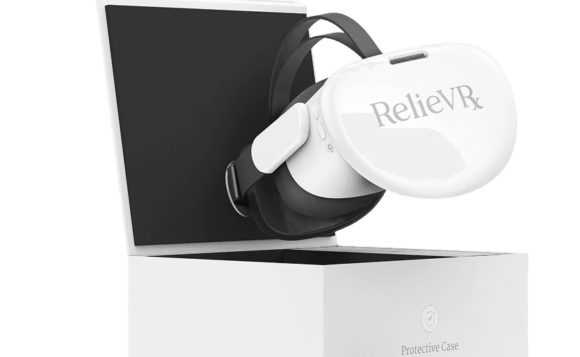
The clinical data behind it is unusually strong for the sector. AppliedVR’s RCT enrolled over 1,000 participants with chronic lower back pain, and the secondary analysis published in late 2024 found that 70% of patients with high-impact chronic pain (the most disabling category) transitioned to low-impact pain by the end of treatment, and 67% maintained that improvement at 12 months. The treatment protocol is modest: about six minutes a day over 56 days, built on CBT principles like pain neuroscience education, body awareness, and cognitive reframing. By the latest disclosures, RelieVRx is in use across 200+ health systems and has reached more than 60,000 patients.
2. Physical rehabilitation
Neuroplasticity, the mechanism by which the brain rewires itself after injury, requires intensive and repetitive exercises (often hundreds of active repetitions per session, sustained over weeks or months). Conventional physiotherapy struggles with both challenges: the exercises are monotonous (which kills patient motivation), and the precise dosimetry of repetitions is difficult to track outside the clinic. The result: patients who could fully recover often stop improving partway through.
Immersive environments can gamify rehabilitation exercises, turning a balance drill into a virtual ski slope, or a reaching task into a fishing expedition, which keeps patients engaged for the volume of repetitions neuroplasticity actually requires. At the same time, the headset and controllers generate precise data on each repetition: range of motion, speed, accuracy, time-on-task. So, a physical therapist can prescribe a clinically-dosed protocol the patient can execute at home, with the therapist reviewing performance data the next day.
Among the more established players in this space is Virtualis, a company that has equipped over 900 clinics and treated more than 1 million patients globally. The company offers four FDA- and CE-certified product lines: PhysioVR for general physical therapy, BalanceVR for vestibular and balance disorders, and StaticVR and MotionVR—force plates integrated with VR for static and dynamic rehabilitation. The clinical scope is broad: traumatology, orthopedics, proprioception, neurology, sports medicine, and vestibular disorders.
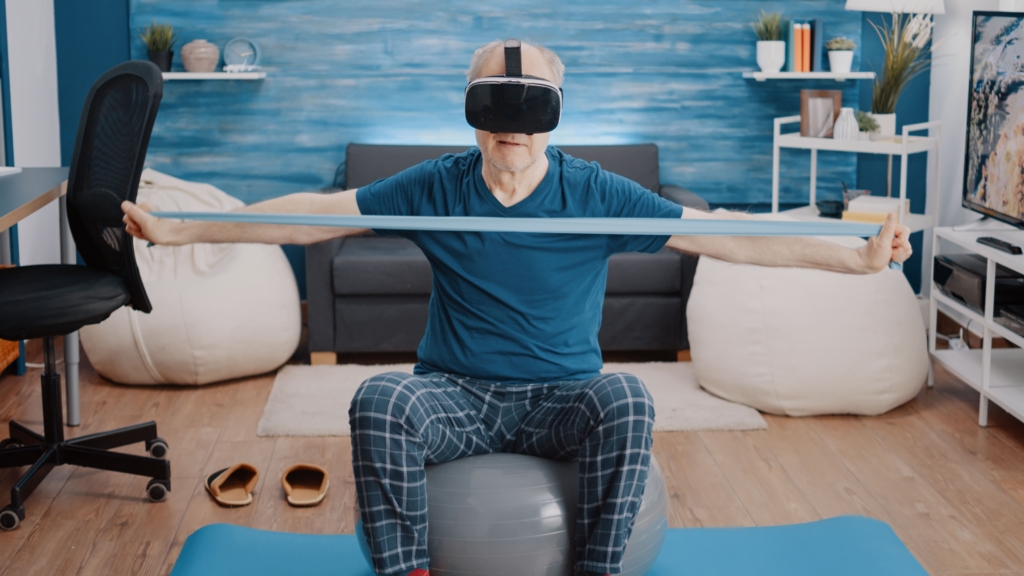
The broader evidence base for VR in physical rehabilitation is substantially stronger than most observers realize. A 2024 meta-analysis published in BMC Medical Informatics and Decision Making synthesized 55 randomized controlled trials covering 2,142 stroke patients and found that VR-based rehabilitation outperformed conventional occupational therapy across five outcome measures: upper limb motor function, functional independence, quality of life, spasticity, and dexterity. Moreover, the researchers found that interventions longer than six weeks produced superior results, and that starting VR within the first six months post-stroke was the optimal window for outcomes.
Mind: mental health, mindfulness and exposure
3. Mindfulness
Major medical institutions now prescribe mindfulness-based stress reduction (MBSR) and mindfulness-based cognitive therapy (MBCT) for conditions ranging from anxiety to chronic pain, and the peer-reviewed evidence base behind these protocols is substantial. The practice has a known adoption problem, though: most people who try meditation quit within weeks, citing difficulty focusing, restlessness, or uncertainty about whether they’re doing it right.
VR addresses this problem. The same immersion that reduces pain perception in clinical VR also crowds out the wandering thoughts and environmental distractions that make ordinary meditation difficult particularly for beginners. A visually engaging immersive environment gives the brain an external anchor that audio-guided meditation lacks.
The leading commercial example is Headspace XR, the VR extension of Headspace—one of the most-used mindfulness apps globally. Headspace XR packages meditation sessions into immersive natural environments: floating through space, walking through forests, sitting on virtual beaches. What’s interesting about Headspace XR is that it’s positioned as a wellness product, not a medical one. It isn’t FDA-cleared, doesn’t make medical claims, and isn’t covered by insurance. That gives it some advantages: fewer regulatory hurdles and a business model that can scale faster directly to consumers. But it also means it can’t be prescribed by doctors or marketed as a clinical treatment.
Mindfulness VR plays a different role in the market. It’s less about treatment and more about getting people comfortable with using VR for mental well-being.
For many users, guided meditation in VR becomes their first experience with this kind of technology. That makes them more open later to VR-based therapies for pain management, rehabilitation, or mental health treatment recommended by a clinician.
So while mindfulness VR is not where the big medical or regulatory breakthroughs are happening, it is helping build broader acceptance of VR in healthcare.
4. Mental health treatments
Mental health is one of the largest unmet clinical needs in the world. The WHO estimates that nearly one billion people globally live with a mental disorder, with anxiety disorders and depression the most common. The treatment gap is severe and unevenly distributed: in low- and middle-income countries, over 75% of people who need mental health care don’t receive any treatment at all; even in high-income countries, roughly two-thirds of cases go untreated. The reasons cluster around the same structural problems: therapists are scarce, sessions are expensive, and stigma keeps people from seeking care.
VR offers something the traditional therapy model can’t easily provide: a private, scalable, low-friction way to deliver evidence-based protocols at home. For categories like specific phobias, where the clinical gold standard is exposure therapy, this is powerful. Real-world exposure is logistically difficult: a therapist can’t easily take a patient with a fear of flying onto an airplane, or expose someone with arachnophobia to a controlled environment full of spiders. VR can. The patient experiences the feared stimulus in a graduated, repeatable, safe context, while the underlying therapeutic mechanism (habituation and cognitive restructuring) works the same way as in-person exposure.
The clearest commercial example in self-administered exposure therapy is oVRcome, offering VR programs for common phobias and anxieties: fear of flying, heights, needles, spiders, public speaking, social anxiety and more. The solution is clinically validated through a published trial at the University of Otago covering 129 subjects across five phobias. oVRcome also offers a parallel B2B clinician portal, allowing therapists to use the VR content in-clinic or assign it as homework.
A widely cited 2007 study by García-Palacios and colleagues, conducted on 150 patients with specific phobias, found that 76% preferred VR exposure over real-world exposure. Refusal rates were also much lower: 3% for VR versus 27% for in-person exposure therapy. The study was relatively small and is now dated, but it is still frequently cited because it highlights a real clinical problem: many patients who could benefit from exposure therapy never begin treatment because the real-world version feels too overwhelming. VR helps lower that barrier.
5. Mental therapeutics for seniors
An aging population is becoming one of healthcare’s biggest long-term challenges. In the United States alone, the number of adults over 65 is expected to reach 82 million by 2050, with similar trends across Europe and East Asia.
Two problems are especially difficult to address in older adults: social isolation and cognitive decline linked to dementia. Both have a major impact on health and quality of life, and traditional geriatric care often struggles to treat them effectively.
Social isolation is often underestimated, even though it has a major effect on health. A large meta-analysis covering more than 300,000 people found that strong social relationships increase the likelihood of survival by 50% (an effect comparable to quitting smoking).
For many seniors in long-term care facilities, isolation is built into daily life. Limited mobility, fewer family visits, and repetitive environments make social engagement difficult. Dementia makes the situation even harder: as cognitive decline progresses, patients often withdraw from activities and may experience more anxiety, agitation, and other behavioral symptoms.
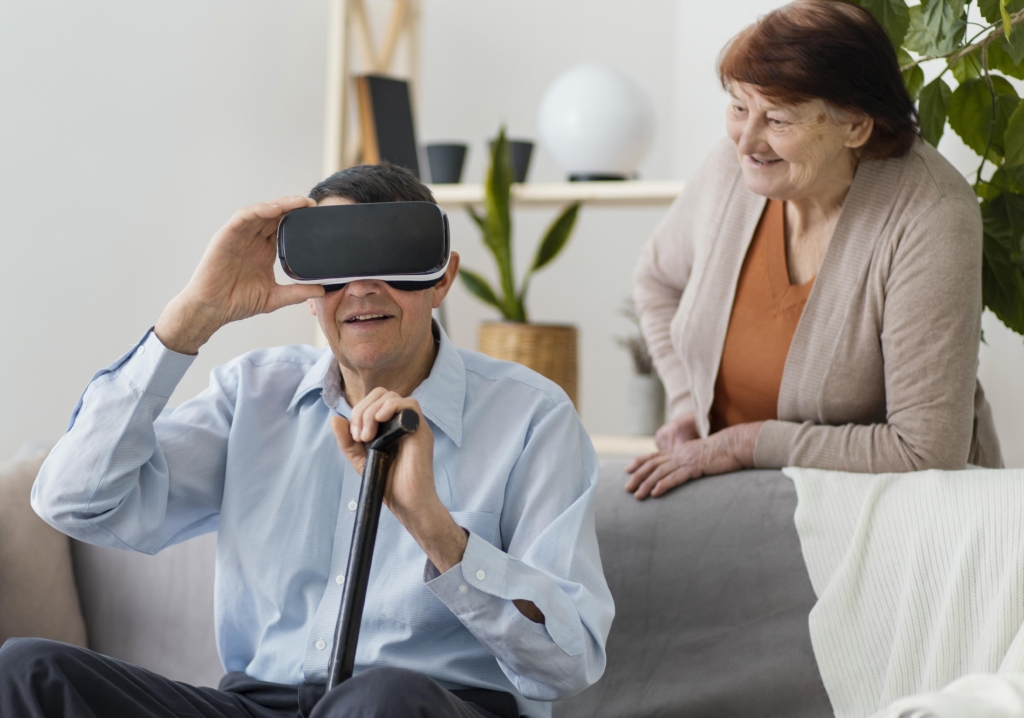
VR addresses both problems through the same mechanism: it transports the patient somewhere else. A person with limited mobility can visit a beach, walk through a forest, or revisit a familiar place from their youth. These VR experiences have been shown to improve mood and engagement. For people with dementia, reminiscence-based VR content can also reduce agitation and encourage more social interaction. VR is not a cure for dementia, but it can meaningfully improve day-to-day quality of life, which is often the most realistic goal at this stage of the disease.
The leading commercial player in this category is MyndVR, which has built a platform specifically for senior living, memory care, and hospice settings. The company supplies headsets pre-loaded with a curated library of immersive content (travel experiences, nature scenes, music, reminiscence content, cognitive games) designed for the specific cognitive and physical limitations of older users. The business model is institutional: senior living operators sign multi-year subscriptions, with monthly content updates and staff-facilitated resident sessions integrated into their care programs.
Brain: cognitive rehab
6. Cognitive rehabilitation
Cognitive rehabilitation focuses on helping people recover mental abilities after brain damage caused by stroke, traumatic brain injury, or early-stage neurodegenerative disease. These abilities include memory, attention, language, processing speed, and decision-making—the skills people rely on in everyday life to manage tasks, follow conversations, organize routines, or live independently.
The clinical mechanism behind recovery is already mentioned neuroplasticity. But cognitive rehabilitation only works when exercises are challenging enough to train the impaired function without becoming so difficult that patients lose motivation. Traditional cognitive rehab usually relies on paper exercises, board games, or therapist-led activities. These approaches can be hard to standardize and often struggle to keep patients engaged. Two patients working on “memory training” with different therapists may end up doing completely different exercises, making progress harder to measure and compare.
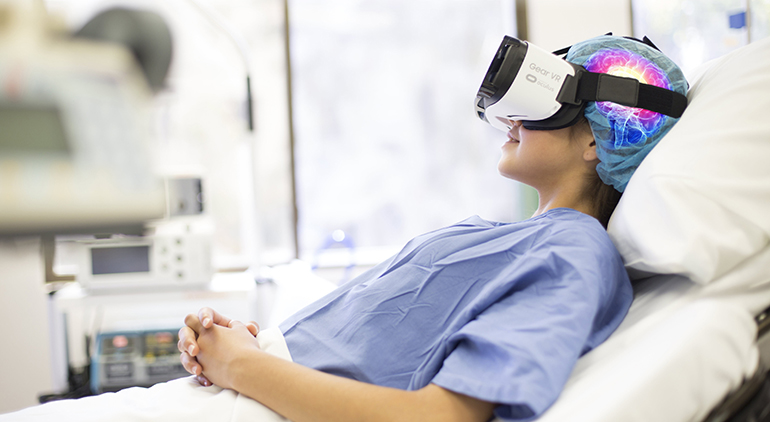
Immersive environments make cognitive exercises feel more natural and engaging. A memory exercise becomes finding hidden objects in a familiar virtual kitchen; an attention task becomes navigating a virtual marketplace while filtering distractions; a language exercise becomes a guided conversation in a simulated café. The clinical content is standardized across patients, while the experience feels personally engaging.
One of the clearest commercial examples in this space is a clinical XR platform offering cognitive training designed for healthcare use. These solutions target key cognitive domains, including memory, attention, processing speed, executive function, and decision-making, through structured XR exercises prescribed by clinicians and completed by patients at home.
The evidence base for VR in cognitive rehabilitation is large but uneven in quality. A 2021 umbrella review published in the Journal of NeuroEngineering and Rehabilitation synthesized 41 meta-analyses on VR neurorehabilitation in stroke, traumatic brain injury, and cerebral palsy. The authors found that much of the available evidence was still considered low quality, and only a small number of studies reached moderate or high quality. Even so, the overall results were consistently positive. Across multiple patient groups, VR showed potential benefits for both cognitive function and daily functioning, with the strongest evidence seen in stroke and acquired brain injury rehabilitation.
The honest read is that cognitive rehab VR is at an earlier maturity stage than pain management VR. The clinical mechanism is well-founded, early outcomes are encouraging, but the field is still waiting for the kind of large, well-designed RCT that AppliedVR did for chronic pain.
Outlook 2026–2028
If the past five years built the regulatory and commercial infrastructure for VR therapeutics, the next two years will test whether that infrastructure can scale. A few specific signals are worth tracking.
- AI personalization is moving from concept to product. By 2028, most FDA-cleared VR therapeutics will likely incorporate some form of AI-driven content personalization or adaptive difficulty. The clinical logic is straightforward: therapy that adapts to the patient’s response curve in real time delivers better outcomes than fixed protocols.
- Cigna’s September 2025 move is the watershed precedent for commercial payers. When a major US insurer like Cigna began covering FDA-approved digital therapeutics, it showed that these products are starting to be treated as real medical care rather than experimental wellness tools. The key question now is whether other insurers follow. If more major payers begin reimbursing prescription VR therapies over the next 12–18 months, the market could move from an early-stage niche into a standard part of healthcare.
- Reimbursement expansion beyond pain management. The biggest commercial challenge for VR therapeutics today is reimbursement. Right now, chronic lower back pain is the only area with a well-established insurance pathway. The next likely candidates based on the strongest clinical evidence so far are PTSD, anxiety disorders, and neurorehabilitation after stroke.
VR therapeutics in 2026 is no longer just an experimental technology. It is becoming a real healthcare category, with FDA-approved products, reimbursement pathways, billing codes, and several distinct areas of use.
The big question over the next two years is which applications will become standard practice first. Chronic pain management is currently leading the way, largely because RelieVRx has already established a model for clinical validation and reimbursement. But some of the biggest opportunities may come from areas that have received less attention so far.
In other words, VR therapeutics is moving from an early frontier into an established market category. And the decisions made over the next 24 months will likely shape who leads the field for the rest of the decade.
Industrial digital transformation is no longer just about automation or collecting data. More and more, it comes down to having a live, accurate digital representation of what is actually happening across physical operations. That is what a digital twin does: it creates a virtual model of a machine, a production line, or an entire facility, and keeps it synchronized with real-world data in real time. This makes it more than a visualization tool. It becomes a working instrument for a variety of industrial applications: simulations, predictive maintenance, monitoring and analytics, process and operational optimization, quality control, worker enablement, EHS solutions, and faster decision-making.
Industrial Extended Reality (XR) and immersive technologies are entering their second wave of adoption. While the first wave was shaped mainly by experimentation with XR, the current stage is enabled by mature hardware and significantly stronger digital capabilities, allowing organizations to realize the true value of VR and AR in practical, scalable ways. In parallel, digital transformation is shifting from the automation-led, low-human-involvement logic of Industry 4.0 toward a human-centric model built on human-machine collaboration and co-piloting in Industry 5.0.
Industry is adopting Extended Reality (XR) faster than any other sector. Manufacturing and industrial operations accounted for 35.1% of the global digital twin market in 2025. More than half of companies using digital twins report profitability increases of over 20%, and Gartner predicts that by 2027, 40% of large industrial companies will use the technology, resulting in increased revenue. The market overall is projected to grow from $49.2 billion in 2026 to $228.46 billion by 2031.
These numbers show that digital twins become a core part of how industrial companies compete and operate. In this article, we look at the specific areas where digital twins create the most value in the industrial sector today, walk through real-world cases from companies already using them at scale, and discuss where the technology is headed next.
Why Digital Twins are more than virtual models
The role of digital twins has broadened significantly, now covering simulation, planning, operations, and essential 3D visualization needs. As a strategic capability, the digital twin helps organizations understand the present state of assets and systems, anticipate what comes next, and make more precise, informed decisions.
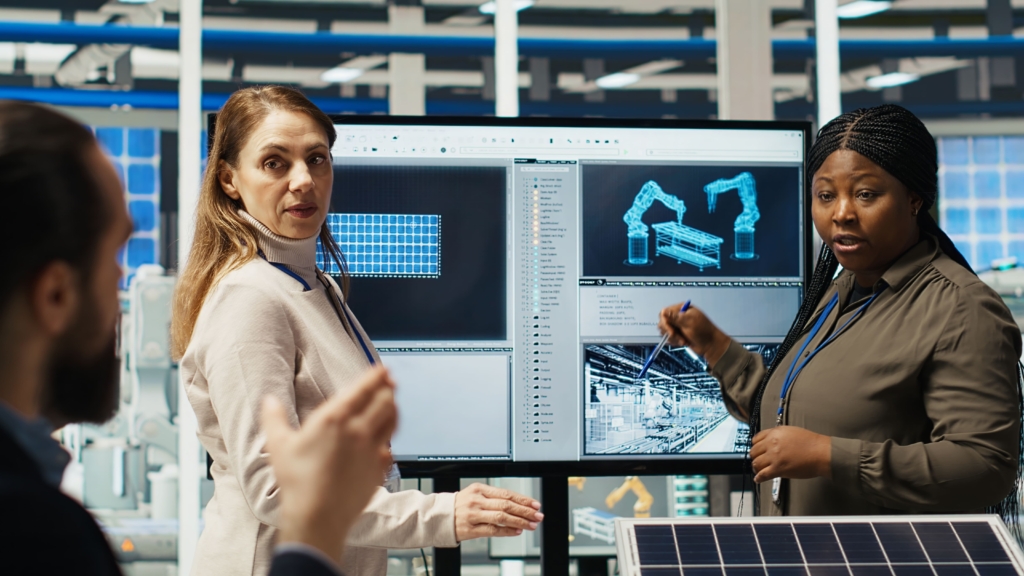
This is what separates them from the technologies they are often confused with. A 3D model is static and disconnected from physical reality. A simulation runs defined scenarios but doesn’t update as circumstances change. BIM captures asset properties at a point in time—valuable, but not dynamic. A digital twin does all three, continuously. Let’s look at how this works from a technological perspective.
The technology stack behind the intelligence
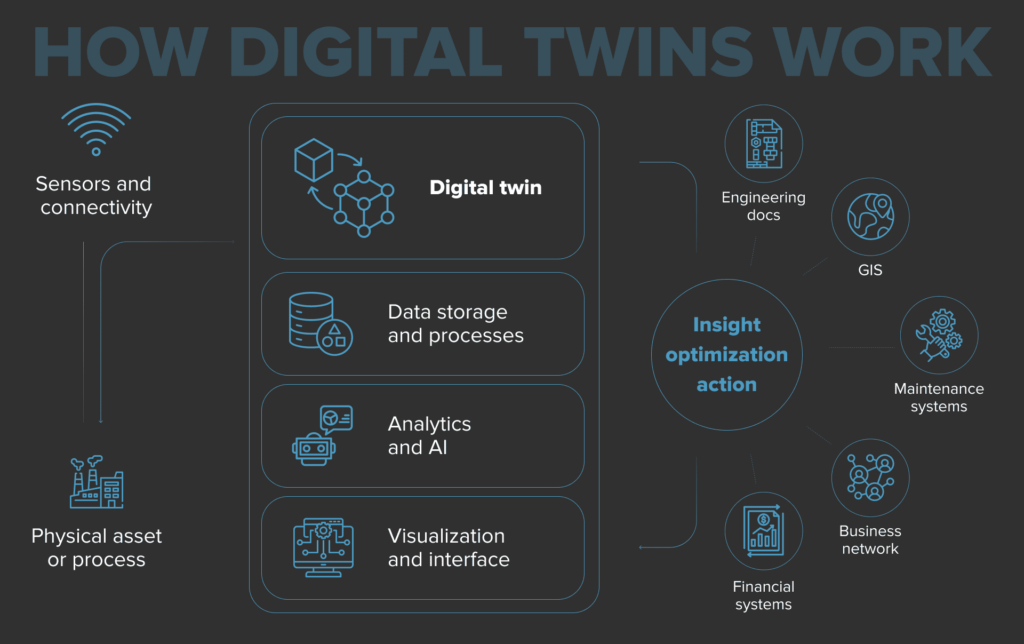
Within the virtual model, three interconnected layers work together.
- The first is the data storage and processing layer, responsible for ingesting, organizing, and structuring incoming data streams. IoT sensors and edge devices form the foundation of data acquisition, continuously capturing physical parameters: temperature, vibration, pressure, energy consumption, throughput. This data moves through real-time pipelines into processing environments.
- The second is the analytics and AI layer, which interprets this data by detecting anomalies, identifying patterns, generating forecasts, and providing recommendations to guide operational decisions.
- The third is the visualization and interface layer, translating these insights into clear, actionable formats: dashboards, alerts, or interactive simulations, that engineers, operators, and executives can easily use.
A digital twin also integrates with the broader enterprise ecosystem, including engineering documentation, GIS platforms, maintenance systems, financial tools, and business networks.
The result is a closed loop of intelligence. Physical reality continuously updates the virtual mode → the model generates insights → and those insights guide decisions that impact the physical system.
Types of digital twins
Depending on the level of detail and the specific operational goals, a digital twin can focus on a single component, a complete asset, an entire system, or even a full process. Recognizing these distinctions helps organizations select the right model for each use case.
A component twin represents a single element (a pump, a bearing, a sensor) and is primarily used for granular condition monitoring and early failure detection.
An asset twin integrates multiple components into a unified model of a complete physical asset, such as a machine or a turbine, enabling a more comprehensive view of performance and interdependencies.
A system twin extends this further, representing how multiple assets interact within a broader operational environment (a production line, a power grid, or a supply chain node).
A process twin models entire workflows and decision sequences, making it possible to trace how disruptions, inefficiencies, or interventions propagate across an organization.
In real-world deployments, these levels are layered: component twins feed into asset twins, which feed into system and process twins. This nested setup mirrors actual operational complexity and enables insights at any level, from individual parts to entire workflows.
Where digital twins create the most industrial value
Below, we break down the use cases where digital twins are generating the most value in the industrial sector today.
Predictive maintenance and asset reliability
Unplanned equipment downtime remains one of the most costly scenarios for any industrial enterprise. When a critical asset fails unexpectedly, the company loses not only on repairs but also on production chain disruptions, logistical failures, and reputational risks. This is why predictive maintenance powered by digital twins has become one of the most mature and economically justified applications of the technology.
The traditional approach to maintenance operates on two models: reactive (repair after failure) or scheduled preventive (servicing on a fixed schedule, regardless of the actual condition of the equipment). Both models are inefficient. The first leads to emergency shutdowns, while the second results in excessive spending on servicing components that still have significant remaining life.
The digital twin changes this paradigm. It creates a virtual copy of a physical asset that continuously receives sensor data and updates in real time. Through machine learning algorithms, the system analyzes wear patterns, compares current conditions against historical data, and predicts the moment when a component will reach a critical state. This enables maintenance to be scheduled precisely when it is actually needed, rather than according to a calendar-based plan.
The result is a threefold effect: reduced unplanned downtime, lower spare parts costs, and extended asset lifecycle.
Case: Rolls-Royce’s digital twins of aircraft engines
British company Rolls-Royce, the world’s second-largest manufacturer of aircraft engines, is one of the most shining examples of industrial digital twin deployment. The company creates virtual copies of its aero engines.
The process works as follows: engineers create a digital twin of the engine as a precise virtual copy of the real-world product, then install on-board sensors and satellite connectivity on the physical engine to collect data, which is continuously relayed back to its digital twin in real time. The virtual model analyzes how the engine is performing and predicts when it will require maintenance. To deal with a huge amount of data, Rolls-Royce has created a new platform that brings in data from its airline customers, which is then fed into a Microsoft Azure data lake. This is then turned into a Databricks Lakehouse and analysed using Databricks ML and AI tools.
The key innovation by Rolls-Royce lies in its personalized approach to each engine. Rather than servicing all engines according to a standard manual schedule, the company has shifted to a model where maintenance regimes are tailored to the actual life each engine has lived. Everything is taken into account: how the pilot flies the aircraft, the climatic conditions of the routes, and the load the engine experiences.
The practical results are remarkable. Digital twins have enabled the company to extend the time between maintenance for some engines by up to 50%, which has also allowed it to dramatically reduce its inventory of parts and spares. For airlines, this means fewer interruptions, as the engine stays on wing longer. Where a particular part might previously have been rated for, say, a thousand flights under a pessimistic scenario, accurate data from the digital twin can extend that life to two or even five thousand flights.
Beyond maintenance, Rolls-Royce’s digital twins save time and money in the rigorous testing of new engines that need to gain certification.
Operations optimization and system-wide visibility
Industrial operations rarely fail because of a single broken component. More often, the real losses come from invisible inefficiencies: bottlenecks that nobody notices until throughput drops, coordination gaps between departments, or decisions made on incomplete data because information is scattered across disconnected systems.
Digital twins address this challenge by creating a unified, real-time virtual representation of an entire operational ecosystem. First, operators no longer need to jump between five different screens to understand what is happening across the facility. Second, it enables scenario simulation: before implementing a change in production flow, staffing, or logistics routing, teams can test it virtually and observe the consequences without risking real disruption. Third, it helps identify bottlenecks and coordination inefficiencies that would otherwise remain hidden in the noise of day-to-day operations.
Case: Port of Corpus Christi’s OPTICS
The Port of Corpus Christi in Texas is the largest crude export terminal in the U.S. and third largest in the world, spanning roughly 36 miles.
The port faced a fundamental challenge: dispatchers had to manually collect and interpret data from dozens of siloed applications. Information had to be relayed from office staff to people in the field through screenshots, emails, radios, and cell phones. Plus, there was no cohesive integration between disparate systems.
To solve this, the port developed a digital twin called OPTICS (Overall Port Tactical Information Computer System) using the Unity game engine integrated with Esri’s ArcGIS platform.
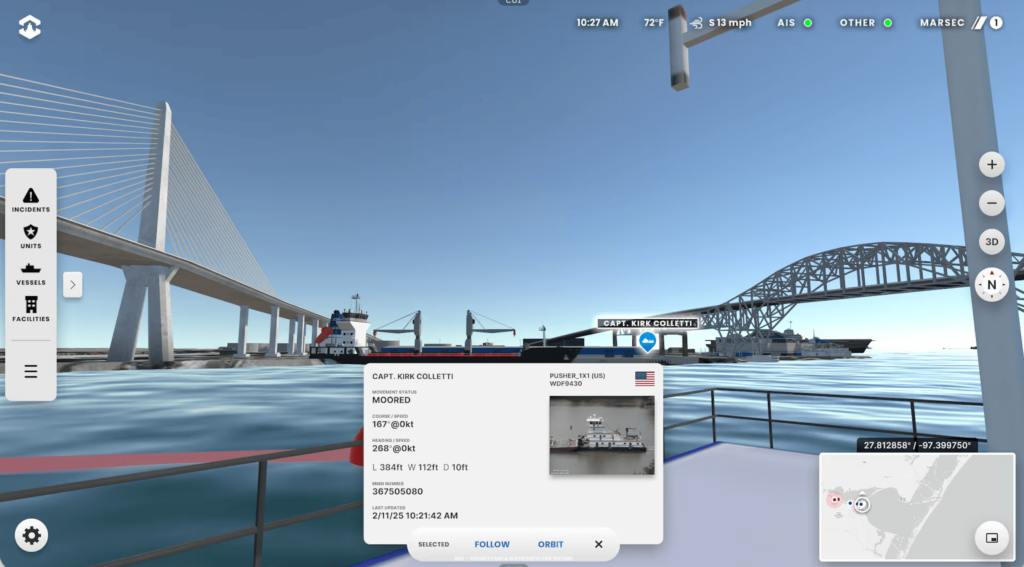
The system combines satellite data, IoT sensors, and 3D modeling with advanced analytics and AI, providing real-time tracking of hundreds of vessels, weather and tide monitoring, and security-level data from the Coast Guard’s Maritime Security system. All of this is rendered in an interactive environment where operators can navigate the port visually, click on any vessel to see its status, speed, and movement, and assess its proximity to other ships and infrastructure.
Staff can use the system to monitor the port in several modes: real time, near real time with approximately a two-minute delay, and future state. This last capability is critical for planning. The port can virtually simulate future scenarios, such as assessing sightlines and potential risks from a new bridge under construction over the ship channel, identifying vulnerabilities before the structure is even completed.
Process quality and production resilience
In high-precision manufacturing, quality is a continuous condition that must be maintained across thousands of variables simultaneously: temperatures, pressures, feed rates, material properties, environmental conditions, and human inputs. Even a small deviation in any of these can lead to defective parts, wasted materials, production delays, or serious safety risks down the line.
Traditional quality control relies heavily on post-production inspection: parts are manufactured, then checked. By the time a defect is discovered, the damage is already done. The production time is lost, materials are wasted, and the root cause may be difficult to trace back through a complex process chain.
Digital twins shift this model to prevention. They enable continuous monitoring of every relevant parameter as production unfolds. ML algorithms analyze incoming data streams, compare them against expected behavior, and flag anomalies the moment they emerge, often before a human operator would notice anything unusual.
Beyond anomaly detection, digital twins contribute to production resilience. When a disruption occurs, whether a machine malfunction, a supply chain delay, or an unexpected change in material properties, the virtual model can simulate alternative scenarios and help teams adapt without halting the entire line. The result is a production system that is not only more precise, but also more adaptive and less fragile.
Case: Airbus’s digital twins across aircraft manufacturing
Airbus, one of the world’s largest aircraft manufacturers, is pursuing what it calls “end-to-end digitalization,” making all information about its aircraft, their production, and maintenance systems readily accessible in digital form. The approach is being deployed across all Airbus divisions, from commercial aircraft to helicopters to defense and space, and was developed in partnership with Dassault Systemes using its 3DExperience platform.

At Airbus factories, industrial digital twins use machine data to monitor production processes in real time. At Hangar 9 in Hamburg and in the Gearbox manufacturing line for Helicopters in Marignane, production progress is automatically tracked and compared with theoretical plans. This continuous comparison between what should be happening and what is actually happening creates an immediate feedback loop for spotting deviations.
At the Saint-Eloi plant in Toulouse, data from drilling and milling machines helps the company detect quality deviations. In Illescas, Spain, monitoring parameters like speed, pressure, temperature, and humidity allows teams to identify quality issues at a composite draping station, where even minor environmental fluctuations can affect the structural integrity of the materials used in aircraft components.
Airbus reports that data analytics applied through these digital twins has reduced rework by up to 20% in certain processes, a substantial figure in an industry where rework is both expensive and time-consuming.
Virtual сommissioning
Every new production line, every robot cell, every layout change carries a hidden cost: the gap between the plan and reality. Traditionally, this gap is closed through physical commissioning, a process where equipment is installed, tested, adjusted, and retested on the actual factory floor. It works, but it is slow, expensive, and disruptive. Production must be paused, engineers must be on site, and mistakes discovered during physical testing require real-world corrections that consume time and resources.
Virtual commissioning eliminates much of this risk by shifting the testing phase into the digital world. Before any physical construction begins, companies create digital twins of their production lines, robotic cells, and logistics systems, then simulate their operation in a virtual environment. Control software is tested against the virtual model, robotic movements are verified for collisions and cycle times, and material flows are optimized, all without touching a single piece of physical equipment.
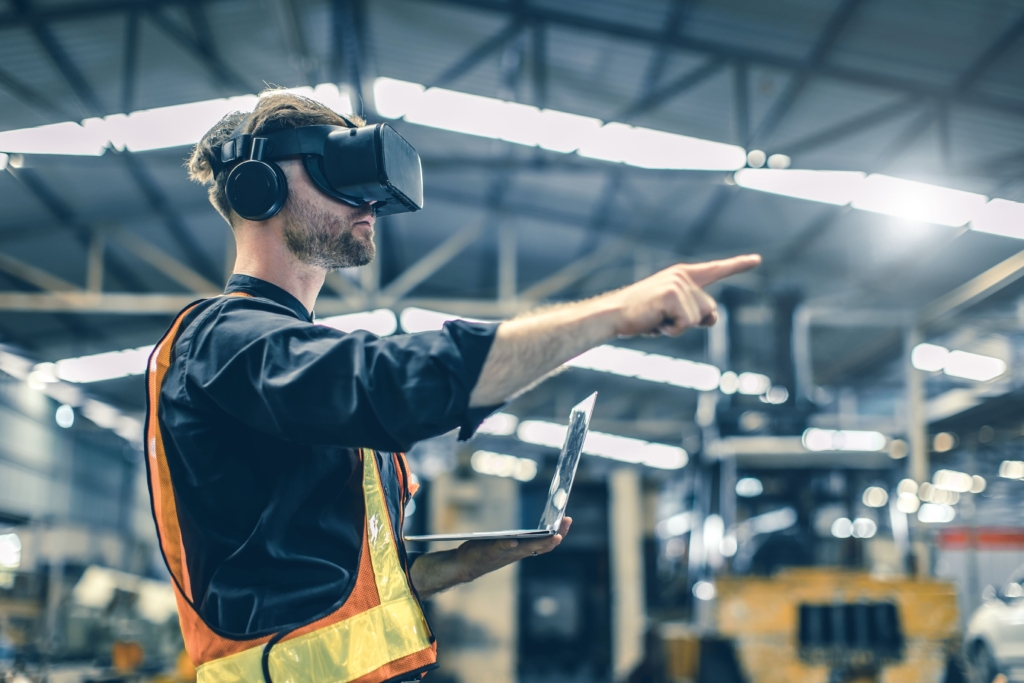
Virtual commissioning compresses timelines, allowing multiple design iterations to happen in days rather than months. It enables global collaboration, since engineers in different locations can work on the same virtual model simultaneously. And it fundamentally changes the risk profile of new product introductions: by the time equipment is physically installed, it has already been validated in a digital environment that mirrors real-world conditions with high fidelity.
Case: BMW Group’s Virtual Factory
BMW Group, one of the world’s largest automakers, produces 2.5 million vehicles per year, 99 percent of which are assembled to individual customer specifications. Coordinating changes across such a production network using traditional methods had become virtually impossible.
The answer was the Virtual Factory, a digital twin-based system that allows production processes to be simulated and optimized virtually before physical implementation, across more than 30 production sites worldwide.
Building this system began with massive data collection. Starting in November 2020, BMW scanned more than seven million square meters of indoor space and 15 million square meters of outdoor production areas using NavVis mobile mapping technology with millimeter precision. This data became the foundation for building virtual copies of all plants.
Built on NVIDIA Omniverse, the platform enables real-time 3D simulations that allow planners to model factory layouts, simulate manual tasks, and optimize robotics and logistics systems. The platform integrates tools from multiple vendors, including Siemens Process Simulate, Autodesk Revit for building planning, and Dassault Systemes CATIA for vehicle design, bridging previously siloed environments into a unified workspace.
The most compelling proof of the approach came with the Debrecen plant in Hungary. BMW built this facility entirely in virtual space before breaking physical ground. In March 2023, the plant achieved virtual start of production more than two years before actual operations began, becoming the world’s first factory planned and validated completely through simulation.
The system is now tackling an even larger challenge. Between now and 2027, the BMW Group will integrate more than 40 new or updated vehicle models into its global production. This will first be done virtually to ensure immediate stability at the plants.
The system is projected to reduce production planning costs by up to 30%.
Where industrоial digital twins are headed
The technology is maturing fast, and its trajectory points in several clear directions. Below, we look at four trends that are shaping the next stage of industrial digital twins.
- Trend 1: From individual assets to enterprise-wide ecosystems
Early digital twins were built around individual assets: one engine, one machine, one robotic cell. The current wave is expanding in both directions, horizontally across facilities and vertically through organizational layers. Asset-level twins are being connected into plant-level models, plant models are being linked into network-wide simulations, and entire value chains are gradually becoming digitally representable. The cases of BMW and Airbus clearly demonstrate this.
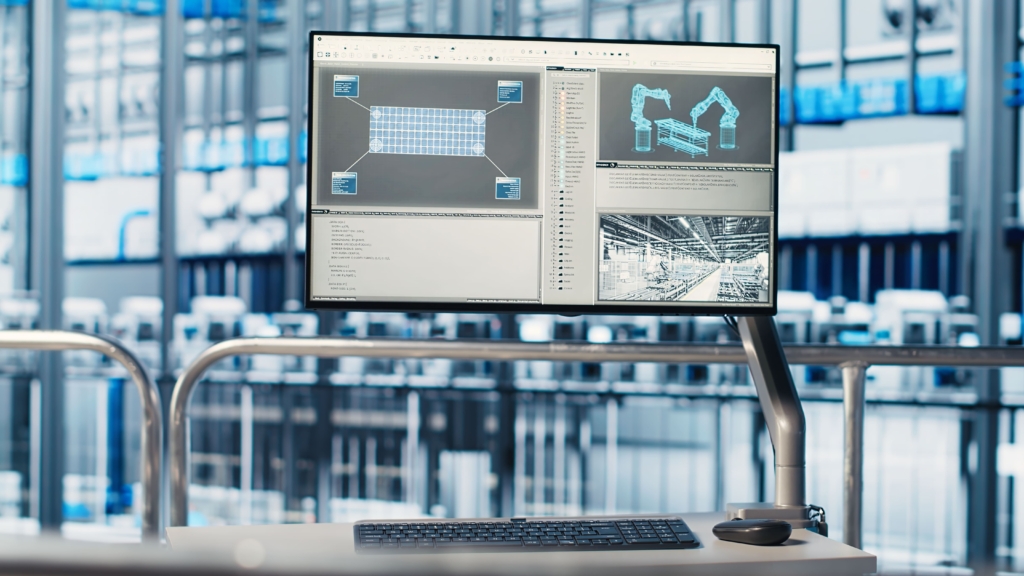
- Trend 2: Immersive environments
Another trend reshaping how people interact with digital twins is the emergence of the industrial metaverse: immersive 3D environments where operational twins become something you can walk through, not just look at on a dashboard.
The global industrial metaverse market is expected to reach $181 billion by 2030, driven largely by the convergence of digital twins, extended reality, and AI.
Building these immersive layers requires deep expertise in spatial computing, real-time 3D rendering, and cross-platform XR development. For industrial businesses looking to adopt XR, Qualium Systems serves as a trusted technology partner, delivering VR and Web3D solutions that simplify the presentation of complex equipment, enhance product understanding, and support more effective digital engagement.
- Trend 3: The standards challenge
Scaling digital twins beyond a single company creates a challenge that technology alone cannot fix: getting different systems to work together. A digital twin relies on data flowing between sensors, software, machines, and people. When a manufacturer, its suppliers, and its logistics partners each run their own digital twins, those systems need a common language to exchange information, and today, that language is still being developed.
Several organizations are working to close this gap, including the International Organization for Standardization (ISO), the Industrial Digital Twin Association (IDTA), the Institute of Electrical and Electronics Engineers (IEEE), and the Digital Twin Consortium (DTC).
Open standards like ISO 23247 for digital twin frameworks and the Asset Administration Shell (AAS) concept for semantic interoperability in Industry 4.0 already exist.
Currently, various programs designed to advance digital twin systems and enabling technologies, so-called Digital Twin Testbeds, are being created. In December 2025, the Digital Twin Consortium announced four new testbeds for validating proof of value, demonstrating interoperability, and accelerating adoption across manufacturing, energy, healthcare, and smart cities.
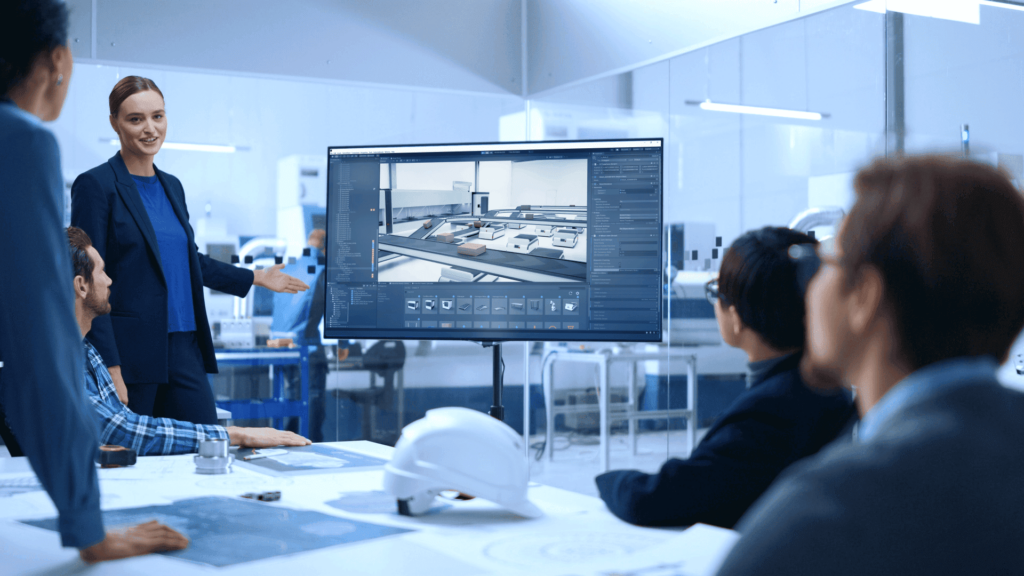
- Trend 4: From modeling to acting
Today, most industrial twins operate in an advisory role. They detect anomalies, forecast failures, and surface recommendations, but a human reviews the output and makes the call. The next generation removes that delay for routine decisions.
AI-driven digital twins are evolving from passive representations into prescriptive, self-optimizing systems. Machine learning algorithms find the best process settings in real time, improve the accuracy of virtual sensors, and allow multiple digital twins to communicate with each other and with physical equipment to make decisions without waiting for human input. As a result, people can spend their time on judgment and creativity rather than routine monitoring.
The global extended reality market (including VR, AR and MR) is expected to reach $84.86 billion by 2029, growing at an estimated annual rate of 28%. But the bigger point isn’t just that the market is expanding, it’s that XR is already proving its value in the places marketers care about most: engagement, conversion, and customer confidence.
In ecommerce, interacting with products via AR leads to a 94% higher conversion rate compared to products without AR. That makes sense: when people can better understand what they’re buying, they’re more likely to move forward and less likely to regret the purchase later.
XR also gives brands something that’s getting harder to win online: attention. VR campaigns generate about 46% higher engagement than traditional digital campaigns. People who interact with AR content spend around 2.7 times longer on product pages.
XR is now showing up in real results. That is why marketing is moving beyond static content toward immersive experiences.
In the following sections, we will share how these technologies can be applied to marketing strategies and explore what the future of immersive experiences might look like.
How XR is transforming modern marketing: 4 use cases that prove it works
With XR, businesses can turn traditional campaigns into fully immersive experiences, where customers can explore products, interact with brands, and connect with content in memorable ways. Its value goes far beyond visual appeal, directly impacting the business growth and customer journey itself. And while this may not be immediately obvious, XR can also save significant resources, reducing the need for physical prototypes, showrooms, or large-scale events, making marketing more efficient.
This is why more businesses are integrating immersive technologies into their marketing strategies, even despite certain challenges, such as development and VR hardware costs, as well as complex technology integration.
Below, we highlight several successful use cases of immersive technologies in marketing.
Virtual try-ons
One of the most persistent barriers to online purchasing is uncertainty. Will these glasses suit my face shape? Will this sofa fit in my living room? Will this shade of lipstick actually complement my skin tone? These are questions that traditionally required a physical store visit. Virtual try-on eliminates that leap entirely.

The technology behind this falls into a few distinct forms. The most accessible is smartphone-based AR. Customers point their phone at themselves or their surroundings, and the app overlays a true-to-scale digital product in real time. A striking example is the FindYourGlasses app developed by Qualium Systems. A step further are dedicated AR headsets and glasses, which immerse the customer in a mixed-reality environment where products can be explored in even greater depth and spatial accuracy.
These technologies help customers understand what they are buying before making a purchase, enabling them to make decisions based on accurate, personalized visualization rather than guesswork.
Real-world example: IKEA Place AR App
IKEA Place AR app lets shoppers visualize furniture in their own physical spaces before buying. Customers simply point their phone camera at a room, select a piece of furniture, and see it rendered in realistic scale within their actual environment. This removes the biggest friction point in furniture shopping: not knowing whether a sofa or shelf will actually fit or match the existing interior design.
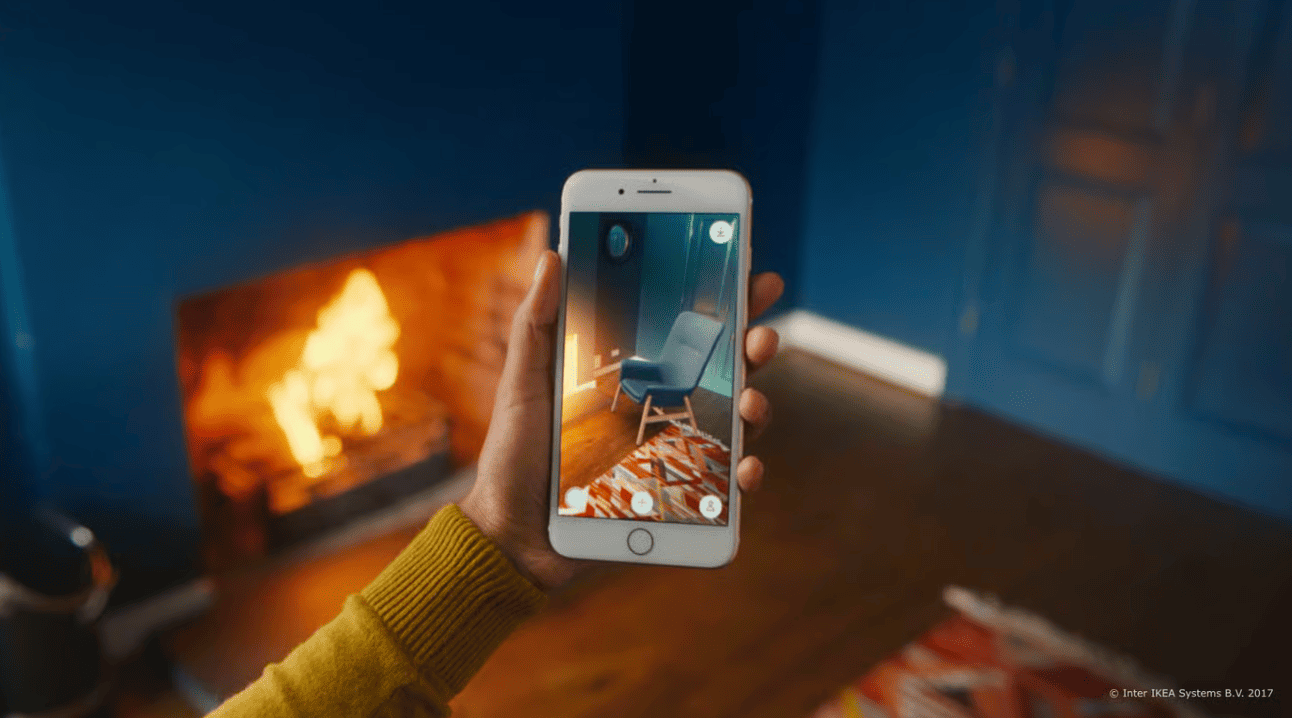
Results: After launch, the app was downloaded millions of times and became one of the most widely adopted retail AR experiences globally. IKEA reported increased customer engagement and reduced returns because customers could see how items fit before purchase. The company reported also that customers who use the IKEA Place app are 11% more likely to complete a purchase compared to those who do not use the app.
Virtual showrooms & Tours
Some purchases simply feel too significant to make without experiencing the space or context first. Traditionally, that meant showing up in person. Virtual showrooms and immersive tours remove that requirement.
The technology here ranges from 360° web-based tours (viewable in any browser without additional hardware) to fully immersive VR experiences delivered through headsets. Visitors can walk through a branded space, interact with products, and access information on demand, without leaving their couch or office.

Automotive brands use virtual showrooms to let buyers explore vehicle interiors, switch trims and colors, and get a feel for the cabin before visiting a dealership. Real estate platforms offer immersive property walkthroughs that let buyers shortlist homes remotely. Hotels and resorts use virtual tours to sell the experience upfront.
The value is especially pronounced in the machinery and heavy equipment sector, where physically demonstrating a product has always been costly: shipping industrial equipment to trade shows, organizing on-site demos, and flying prospects to manufacturing facilities all consume significant budgets. VR removes that overhead entirely: a potential buyer can step inside a virtual factory floor, operate a machine in a simulated environment, and evaluate complex equipment in full detail.
Real-world example: Virtual showroom for MAKEEN Energy industrial equipment
MAKEEN Energy, a global corporation delivering industrial gas solutions and heavy infrastructure equipment, built a true-to-scale virtual showroom. Using 3D models of their equipment in a virtual environment, they were able to pack their sprawling machinery into a portable VR headset and bring it to any trade fair.
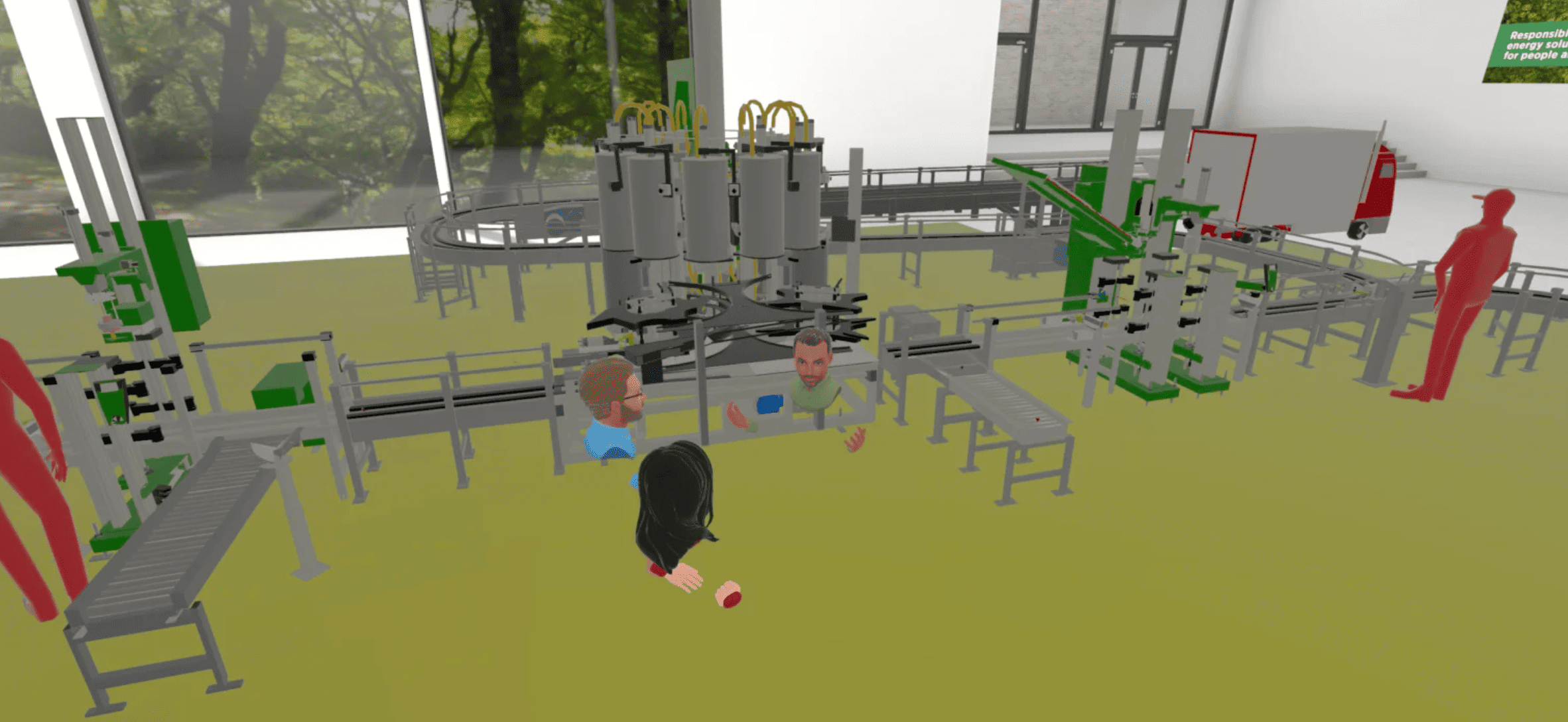
Results: By no longer shipping heavy equipment around the world and reducing travel with virtual product demonstrations, MAKEEN Energy was able to cut logistics costs significantly. The virtual showroom also accelerated complex, multi-stakeholder sales by giving engineers, technicians, and purchase managers across different countries a shared, detailed view of the product. What began as a trade fair tool evolved into a company-wide asset for sales, training, and communications.
For industrial businesses looking to adopt XR, Qualium Systems serves as a trusted technology partner, delivering VR and Web3D solutions that simplify the presentation of complex equipment, enhance product understanding, and support more effective digital engagement.
Immersive brand storytelling
XR gives brands the ability to place customers at the center of a narrative, transforming passive content consumption into a first-person experience that is far harder to forget.
A VR film or AR experience can transport a viewer to a manufacturing facility, back in time, or into the heart of a brand’s story.
What makes this powerful is the emotional depth it creates. When a customer doesn’t just hear about a brand’s values but genuinely experiences them. This matters most for brands where values, heritage, or purpose are central to the proposition: luxury goods, sustainability-driven companies, travel and hospitality, food and beverage.
Real-world example: Jack Daniel’s AR app
Jack Daniel’s rolled out an immersive AR experience tied directly to their product packaging: customers scanned the bottle label with their phone using an app to unlock interactive storytelling. Rather than directing people to a website or a separate campaign, the bottle itself became the entry point. The experience offered multiple narrative paths, letting users choose between the distillery’s origin story, the whiskey-making process, and broader brand heritage.
Thus, Jack Daniel’s gave customers not just information but emotional justification: a sense that they were buying into something with real depth and history.
Results: Over 30,000 users downloaded the app on iOS and Android, collectively watching more than 110,000 AR story experiences with an average session time of more than 5 minutes. In a world, where capturing 30 seconds of genuine attention is considered a win, nearly six minutes of voluntary, engaged interaction with a brand’s story is a remarkable outcome.
Experiential marketing
Experiential marketing is about creating moments people actually remember. With XR, a brand can build an experience once and deploy it anywhere. Coachella used AR filters to let people who weren’t at the festival feel part of it. Timberland brought the outdoors inside their stores with VR, placing shoppers in the exact landscapes their products were made for.
Such XR activations are inherently camera-friendly: people film themselves, share their reactions, and post the experience online. The activation itself becomes content that reaches a wider audience.
Real-world example: Pepsi Max’s “Unbelievable Bus Shelter” AR campaign
Pepsi Max installed an AR screen inside a regular London bus shelter. To people waiting, the glass looked normal. But it was secretly showing live street footage mixed with wild CGI: tigers running at pedestrians, aliens landing, meteors crashing down. Hidden cameras captured the reactions of unsuspecting commuters.
That footage spread naturally across social media, turning a single bus stop into a global campaign.
Results: 8 million+ YouTube views, global press coverage from CNN and ITN, and a ~35% sales increase for Pepsi Max during the campaign. Nearly all of the reach was organic.

The future of XR in marketing
What comes next is a convergence of several technologies that will make XR faster to deploy, more personalized, and far more embedded in everyday life.
Spatial computing is moving XR beyond the phone screen. Devices like Apple Vision Pro and Ray-Ban Meta AI glasses are normalizing hands-free, ambient interaction with digital content. This is a shift that will fundamentally change how brands occupy physical space and how customers engage with products in their environment.
AI-driven personalization means XR experiences will no longer be one-size-fits-all. Generative AI is already being used to create dynamic virtual environments that adapt in real time, tailoring what a customer sees, hears, and interacts with based on who they are and what they need.
5G and cloud XR remove the last major technical barrier to mainstream adoption. High-quality, real-time XR experiences will stream directly to lightweight headsets and phones without heavy local processing, making immersive experiences accessible anywhere, on almost any device.
Together, these shifts point toward something bigger than better tools: a fundamentally different relationship between brands and customers—more interactive, more personal, and less dependent on flat screens as the primary interface. XR won’t be a campaign format or a marketing channel. It will be the environment in which commerce, storytelling, and customer relationships happen.
Conclusion
Today marks XR’s true revival, not as a trend, but as a technology with real, practical applications.
Modern XR is already a working tool that delivers measurable results, supports lead generation, and drives business performance.
AR product pages driving higher conversion. Virtual showrooms replacing costly equipment shipments. Immersive activations generating organic reach that paid media can’t buy.
What once seemed experimental or purely demonstrative is now a proven mechanism for engaging and converting customers, with tangible impact on marketing and operational outcomes.